Showing posts with label fungi. Show all posts

Sunday, 27 October 2019

Autumn is here

September has come and gone, with endless rain. While this has made more difficult the mammoth non- Old Copse project that has taken up almost 20 months of our time, the wood has enjoyed a good soaking. Even though it's mid October, the leaves are only just beginning to turn and some of the oaks remain stubbornly green.

Our big project  has kept us from doing much in the wood, apart from quick visits to restore our sanity. It really brings home how the wood operates on a different timescale to urban life. There really is no tearing hurry: the wood operates on it's own time frame. The growing season has finished and everything is now slowing down and preparing for winter.

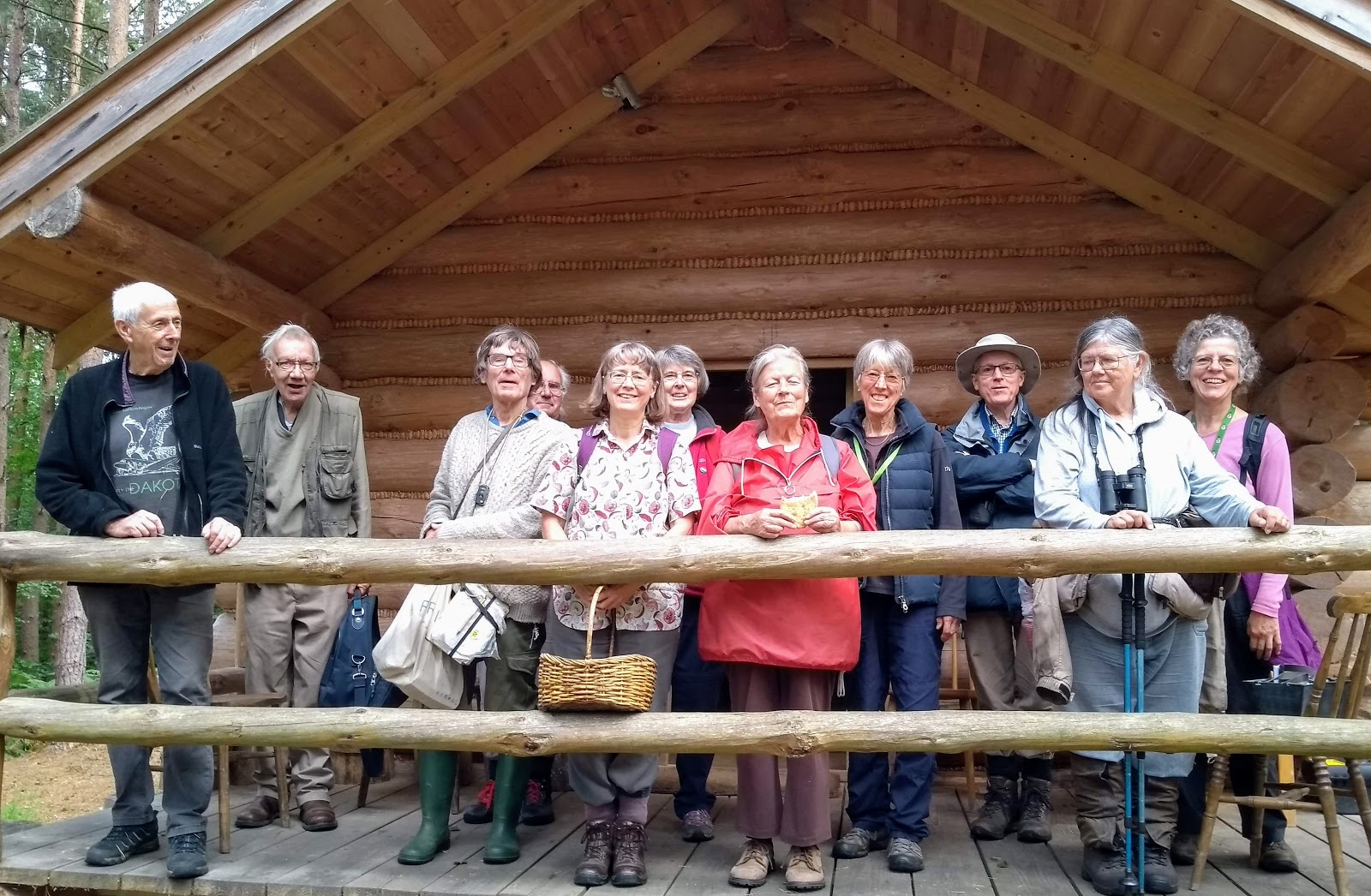
This autumn has been marked by an astonishing crop of fungi - much enjoyed by the West Weald Fungus Identification Group who made their annual visit on October 16th. The purple web caps were the star of the show, and this year are growing in multiple locations. Up by the car park I found over 20 individuals. Full report to follow once Dick Alder has collated their findings.

Purple web cap growing on the ride

Much work remains to be done in the autumn, once time and other commitments permit.

There's still this fallen beech limb to process for firewood - it came down in July


There's work to begin on our planned hazel coppice for dormice
Not to mention more planting - trees to order and arrange to plant in OC2.

Looks like we'll be busy....

Thursday, 27 September 2018

Record breaking fungi


On September 16th the West Weald Fungus Identification Group made a return visit to Old Copse. Led by Dick Alder, this expert group found more than 50 species when they visited last year. This time they were particularly interested in seeing if they could find the purple web cap (Cortinarius violaceus) which was the star of the show on Dick's previous visit.

In the previous couple of weeks I'd hunted in vain in all the places where I'd seen Cortinarius last year. But no joy. Luckily the group are well attuned to spotting the most reclusive specimens and found ten individual examples down by the banks of the pond.

Purple webcap Cortinarius violaceus
OK, this one's a bit battered but it's definitely Cortinarius!

In all the group identified 70 different  types of fungi - the most ever found in one visit to Old Copse. We really appreciate having such expert visitors who help us understand more about the ecology of Old Copse. Full list below.


SCIENTIFIC ENGLISH SUBSTRATE ASSOCIATION
Amanita citrina False Deathcap Soil Betula
Amanita citrina var. alba False Deathcap Soil Betula/Pinus
Amanita excelsa var. spissa Grey Spotted Amanita Soil Betula/Pinus
Amanita fulva Tawny Grisette Soil Betula
Amanita muscaria Fly Agaric Soil Betula
Amanita rubescens Blusher Soil Pinus
Annulohypoxylon multiforme Birch Woodwart Fallen wood Betula
Asterophora parasitica Silky Piggyback Old fruitbody Russula nigricans
Baeospora myosura Conifercone Cap Cone Pinus
Boletus badius Bay Bolete Soil Pinus/Quercus
Boletus edulis Cep Soil Quercus
Boletus erythropus Scarletina Bolete Soil Pinus
Clitopilus prunulus The Miller Soil
Colletotrichum liliacearum Dead stem Hyacinthoides
Coprinopsis atramentaria Common Inkcap Soil
Cortinarius violaceus Violet Webcap Soil Betula
Daedaleopsis confragosa Blushing Bracket Fallen wood Betula
Fistulina hepatica Beefsteak Fungus Trunk Quercus
Ganoderma australe Southern Bracket Log Betula
Gomphidius roseus Rosy Spike Soil Suillus bovinus
Gymnopilus penetrans Common Rustgill Fallen wood Betula
Gymnopus erythropus Redleg Toughshank Litter Betula
Hygrophoropsis aurantiaca False Chantarelle Litter Pinus
Hypholoma fasciculare Sulphur Tuft Fallen wood
Hypomyces chrysospermus Bolete Mould Fruitbody Xerocomellus sp.
Laccaria amethystina Amethyst Deceiver Soil
Lactarius blennius Beech Milkcap Soil Fagus
Lactarius chrysorrheus Yellowdrop Milkcap Soil Quercus
Lactarius hepaticus Liver Milkcap Soil Pinus
Lactarius quietus Oakbug Milkcap Soil Quercus
Lactarius sp. Soil Fagus, Quercus
Lactarius tabidus Birch Milkcap Soil Betula
Lactarius vietus Grey Milkcap Soil Betula
Laetiporus sulphureus Chicken of the Woods Mossy log
Leccinum scabrum Brown Birch Bolete Soil Betula
Lepiota cristata Stinking Dapperling Soil
Mensularia radiata Alder Bracket Dead standing trunk Alnus
Mycena inclinata Clustered Bonnet Fallen trunk
Paxillus involutus Brown Rollrim Soil Betula
Phacidiostroma multivalve Fallen leaf Ilex aquifolium
Piptoporus betulinus Birch Polypore Fallen trunk Betula
Pleurotus pulmonarius Pale Oyster Log
Pluteus cervinus Deer Shield Log Betula
Pluteus salicinus Willow Shield Buried wood
Polyporus ciliatus Log Betula
Polyporus leptocephalus Blackfoot Polypore Log Salix
Postia stiptica Bitter Bracket Log Pinus
Psathyrella piluliformis Common Stump Brittlestem mossy log
Rhodocollybia maculata Spotted Toughshank Soil Betula
Rhopographus filicinus Dead stem Pteridium
Russula aeruginea Green Brittlegill Soil Betula
Russula atropurpurea Purple Brittlegill soil Betula
Russula betularum Birch Brittlegill Soil Betula
Russula claroflava Yellow Swamp Brittlegill Soil Betula
Russula cyanoxantha Charcoal Burner Soil Quercus
Russula densifolia Crowded Brittlegill Soil Betula
Russula laurocerasi Soil Quercus/Betula
Russula nigricans Blackening Brittlegill Soil Betula
Russula nobilis Beechwood Sickener Soil Fagus
Russula risigallina Golden Brittlegill Soil Quercus
Russula sardonia Primrose Brittlegill Soil Pinus
Russula subfoetens Soil Quercus
Russula velenovskyi Coral Brittlegill Soil Quercus
Sparassis crispa Cauliflower Fungus Stump Pinus
Suillus bovinus Bovine Bolete Soil Pinus
Trochila ilicina Holly Speckle Fallen leaf Ilex aquifolium
Trametes versicolor Turkeytail Stump
Trichaptum abietinum Purplepore Bracket Fallen trunk Pinus
Tyromyces chioneus Log Deciduous
Xerocomellus cisalpinus Soil Quercus/Betula
Xylaria carpophila Beechmast Candlesnuff Mast Fagus

Tuesday, 28 November 2017

Autumn roundup: late mushrooms, beech trees, Great Egret............


Mushroom foray

The West Weald Fungus Recording Group led by Dick Alder paid us a visit on 16th November. We  thought their chances of finding many specimens were fairly low this late in the season. Mushrooms had been early this year, and particularly abundant during late August to early October.  But we were  wrong.  While too late for ceps or purple web caps, the group still managed to find 55 different species, which was a surprise to us, though not to the expert visitors.


Ling and Mark, enjoying their introduction to Autumn fungus in Old Copse.

Growing our own

After planting out the best of the home grown oaks in the wood, there were still 30 or so that were  too small. Some of them were getting a bit pot-bound  so a  raised bed in the wood,  well protected from deer, seemed like a good idea. In deeper soil they'll have room to stretch out and start growing properly in the Spring.


Rare visitor


One of the mushroom group arrived early and was lucky enough to see a visiting Great Egret at this spot

We didn't see him, but here's a library picture of what we missed (credit RSPB)


Autumn photos

Old Copse is beautiful at this time of the year. The beech trees really stand out.


A decaying birch stump. First comes the moss, then the fungus.

Wednesday, 23 August 2017

Autumn fungi come early

Cortinarius violaceus - purple webcap (rare)
It's been a strange season for fungi. The summer fungi were very late - appearing only momentarily - yet the autumn fungi are everywhere, and we're only in the third week of August.

These purple webcaps were found growing on the east side of the pond, just up from the fishermen's bridge, so they're not strictly within our boundaries. However it's good to see this rare species making an appearance again. They don't seem to appear in the same spot twice. These ones are over 200m away from where last year's specimens popped up. The only similarities I have noticed is that they seem to grow in proximity to birch, and are more likely to grow near a path or near the edge of the wood where there is less shade.


Russula delica
These russula are typical of the many currently showing in the wood. These were found right at the roadside fence , growing through the leaf litter . Now these ones do come up in the same spot every year. They are very noticeable due to their size and the sheer force with which they push their way out of the ground, heaving aside the pine needles.


Amanita fulva - Tawny Grisette
Several members of the Amanita family are common in the wood - Amanita rubescens, Amanita muscaria (fly agaric), Amanita citrina (false death cap) Amanita excelsa and Amanita fulva (the tawny grisette) pictured above. They are all reasonably easy to identify as Amanita, due to their egg like appearance when young and that they often have a bag like 'Volvo' at the bottom of their stem. Distinguishing between different members of the family is more difficult, especially between pantherina and excelsa, which are both basically brownish mushrooms with spots. The grisettes are still the same family, but have a cleaner appearance, with a smooth stem. They are supposed to be edible, but I don't expect they taste of much. The picture above shows both the young and the fully grown specimen. There is a useful Amanita key here.


Crepodotis mollis - soft slipper toadstool
Finally, this one is a new one for me. Soft, damp and curly, the brittle fungus grows on decaying wood. The photo shows one which was part of a group growing on a dead rowan tree lying on the ground.  Crepodotis mollis - its common name is the soft slipper toadstool, which I can't quite see, but it was definitely soft to the touch.

Monday, 24 October 2016

Mushroom season

 October marks the height of the mushroom season, and this year has been a particularly good year, even if the season is later than usual - presumably a knock on effect of the late wet Spring.


On Sunday 16th October, just over a year since their last visit on September 20th 2015, (see blog post) the Runnymede Ramblers made a return visit for a fungi walk. The foray was led by Dick Alder of the West Weald Fungus Recording Group. The star find of the day was the Purple Webcap  - Cortinarius Violaceus - a rare mushroom which has apparently never previously been found in West Sussex. The nearest known colonies are in the New Forest. In addition to the ones pictured in the previous post, we found a further specimen on the banks of the pond, and the group found another pair in the neighbouring wood. A sample has been sent to Kew, where it will be part of a project on DNA sequencing on the Cortinarius family.

Dick Alder's full list of Sunday's finds is shown at the end of this post and has been shared with the Sussex Biological Records office.

In addition to that list, over the past few days we have also found:

Black bulgar or Batchelor's Buttons - Bulgaria Inquinans

BB growing on dead oakwood

Aleuria arantia

List of fungi finds made 16th October Old Copse:

SCIENTIFIC
ENGLISH
Amanita citrina
False Death Cap
Amanita citrina var. alba
False Death Cap, white
Amanita excelsa var. spissa
Grey Spotted Amanita
Amanita muscaria
Fly Agaric
Amanita rubescens
Blusher
Amanita porphyria
Grey Veiled Amanita
Boletus badius
Bay Bolete
Boletus edulis
Cep
Cantharellus tubaeformis
Trumpet Chanterelle
Clitopilus prunulus
Miller
Coprinopsis atramentaria
Common Inkcap
Cortinarius violaceus
Violet Webcap
Daedaleopsis confragosa
Blushing Bracket
Entoloma nitidum
a Pinkgill
Gomphidius roseus
Rosy Spike
Gymnopilus junonius
Spectacular Rustgill
Gymnopilus penetrans
Common Rustgill
Hydnum repandum
Wood Hedgehog
Hygrophoropsis aurantiaca
False Chantarelle
Hypholoma fasciculare
Sulphur Tuft
Laccaria amethystina
Amethyst Deceiver
Lactarius blennius
Beech Milkcap
Lactarius chrysorrheus
Yellowdrop Milkcap
Lactarius deliciosus
Saffron Milkcap
Lactarius hepaticus
Liver Milkcap
Lactarius rufus
Rufous Milkcap
Lactarius tabidus
Birch Milkcap
Leccinum scabrum
Brown Birch Bolete
Leccinum variicolor
Mottled Bolete
Naucoria escharioides
Ochre Aldercap
Paxillus involutus
Brown Rollrim
Piptoporus betulinus
Birch Polypore
Russula atropurpurea
Purple Brittlegill
Russula claroflava
Yellow Swamp Brittlegill
Russula densifolia
Crowded Brittlegill
Russula nigricans
Blackening Brittlegill
Russula nitida
Purple Swamp Brittlegill
Russula nobilis
Beechwood Sickener
Russula ochroleuca
Ochre Brittlegill
Russula sardonia
Primrose Brittlegill
Scleroderma citrinum
Common Earthball
Suillus bovinus
Bovine Bolete